
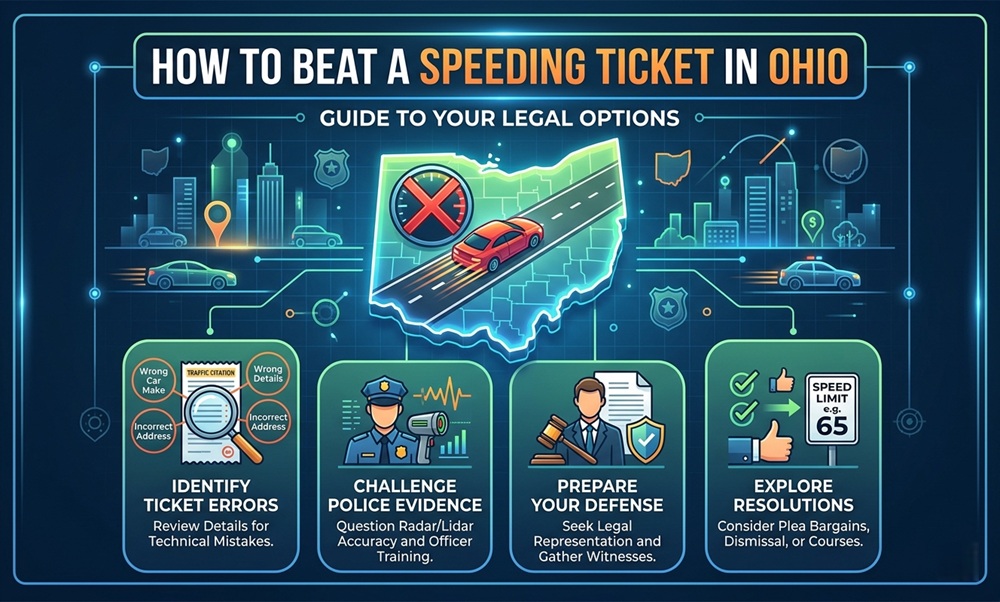

Nobody plans on getting pulled over. But if you’re staring at an Ohio speeding ticket and wondering whether it’s worth fighting — the answer is often yes, especially if you care about your insurance rates or license points.
Here’s a practical, honest breakdown of how to challenge a speeding ticket in Ohio, what strategies work, and what doesn’t.
Should You Even Fight It?
Before diving into tactics, ask yourself:
- How many points do you already have? Ohio suspends licenses at 12 points within 2 years.
- How much over the limit were you? 10 mph over is very different from 25+.
- Do you have a clean record? First-time offenders have more options.
- What’s the insurance impact? A single speeding conviction can raise premiums 15–40%.
If any of these matter to you, fighting or negotiating your ticket is probably worth the effort.
Ohio Speeding Ticket Points at a Glance
| Speed Over Limit | Points Added to License |
|---|---|
| 1–10 mph | 2 points |
| 11–29 mph | 4 points |
| 30+ mph | 6 points |
Proven Strategies to Fight or Reduce a Speeding Ticket in Ohio
1. Request a Continuance and Hope the Officer Doesn’t Show
When you plead “not guilty” and request a hearing, the citing officer must appear. If they don’t, the case is typically dismissed. This happens more often than you’d think — officers have schedule conflicts, transfers, or simply don’t prioritize minor ticket hearings.
2. Challenge the Speed Measurement Method
Ohio officers use several methods to measure speed:
- Radar — most common; can be challenged based on calibration records
- Lidar (laser) — requires specific training and equipment checks
- VASCAR or pacing — officer estimates speed; easier to dispute
- Aircraft speed enforcement — less common but still used in Ohio
Request the calibration records for the device used. If the equipment wasn’t properly calibrated or the officer wasn’t certified to use it, the evidence can be suppressed.
3. Negotiate a Reduced Charge (Plea Deal)
Many Ohio prosecutors will reduce a speeding charge to a non-moving violation like a parking ticket or equipment violation. This means:
- No points on your license
- Lower fine in most cases
- No insurance impact
This is especially common for first-time offenders with clean records. Simply calling the prosecutor’s office before your court date and asking about a reduction can work.
4. Attend Traffic School (Defensive Driving)
Ohio allows some drivers to complete a defensive driving course to have charges dismissed or reduced. Check with your specific court — eligibility varies by county and how recently you attended one.
5. Hire a Traffic Attorney
A local traffic attorney in Ohio often knows the prosecutors, understands local court tendencies, and can negotiate far more effectively than you can alone. For tickets with significant insurance or license consequences, the attorney’s fee (typically $150–$400 flat) pays for itself quickly.
Expert Insight
A retired Ohio traffic court clerk once noted: “Defendants who show up prepared, dressed professionally, and speak respectfully to the judge almost always get better outcomes than those who come in defensive or combative — even with the exact same facts.”
Common Mistakes to Avoid
- Just paying the ticket — it’s a guilty plea and points hit immediately
- Missing your response deadline — Ohio tickets typically require a response within 30 days
- Assuming radar is infallible — it isn’t, and courts know it
- Being rude in court — judges have discretion; first impressions matter
FAQs
Q: How long do speeding ticket points stay on your Ohio record? Points remain on your Ohio BMV record for 2 years from the violation date.
Q: Will a speeding ticket in another state affect my Ohio license? Yes — Ohio participates in the Driver License Compact, so out-of-state violations often transfer.
Q: Can I just pay the fine and avoid court? Yes, but paying is equivalent to pleading guilty, which means full points and an insurance impact.
Q: Is it worth hiring a lawyer for a minor speeding ticket in Ohio? It depends. For 1–10 mph over with a clean record, probably not. For 20+ over or if you have prior points, yes — absolutely.
Conclusion
Fighting a speeding ticket in Ohio isn’t about being dishonest — it’s about knowing your rights and the system. Whether you negotiate a reduction, request a hearing and get lucky with an absent officer, or hire a traffic attorney for a serious violation, you have real options. The worst move is doing nothing. Even one conversation with the prosecutor’s office before your court date could save you hundreds in insurance increases over the next three years.
